
The Heart Behind Our Chai
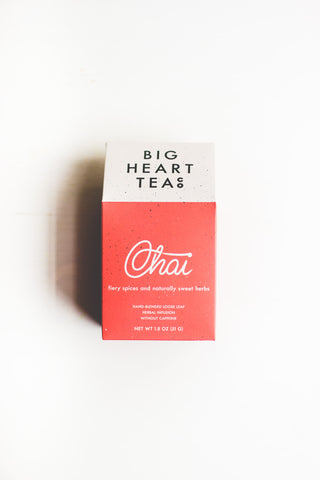
Ingredients: organic tulsi, organic red rooibos, organic cardamom, organic cinnamon, organic ginger, organic star anise, organic peppercorn, organic allspice
It started in an ashram
Before our Founder Lisa Govro ever even imagined starting a tea company, she learned how to make chai at an Ayurvedic cheffing apprenticeship.
Surrounded by the fiery colors of Sedona, Arizona, Lisa started every morning in the kitchen freshly-grinding spices and brewing a big pot of chai for students at 7 Centers Yoga. And she fell in love with the practice of brewing and caring for the community with food medicine. Long before there was a tea company, there was a simple belief: making tea is an act of caring for people.
Where did chai originate?
These days, chai is an American coffee shop staple, but this spicy, sweet brew has been enjoyed for centuries.
Here’s what we know about the origins of our favorite spiced tea: this South Asian drink (that's Pakistan, India, Nepal, Bangladesh, and Sri Lanka) is brewed sweet with strong black tea and cow’s milk (oat milk, soy milk, and others can be substituted), and you can add fiery whole spices or ground spices (“masala” मसाला) from the kitchen to make masala chai.
Each region, city, and village has their own traditional ways of layering spice, milk-to-water ratio, and brewing. There is no one way to make it. It is as diverse and complex as its place of origin.
Herbal remedies have been part of South Asian cultures for centuries. The version of chai many of us know today, however, was shaped by British colonization and India's tea industry. Learn more about India's tea industry in our Partner Story: Assam Heritage Estate.

Some say today’s South Asian adaptation, black tea sweetened with sugar and milk, evolved to help Indian families stretch out valuable black tea stocks, or that Indian drinkers added sugar and spice to balance the bitter tea leaves, while others debate that milk and traditional spice blends were added to keep farm workers sustained and caffeinated between shifts.
If you want to make South Asian chai at home, check out these awesome recipes: Authentic Pakistani Chai by Izzah and Masala Chai (Indian Spiced Chai) Recipe by Shivani.
P.S. We don’t know who needs to hear this right now, but it’s "chai," not “chai tea.” Chai means tea in Hindi ("chaay" चाय). So when you say “chai tea,” you’re actually saying “tea tea.” And while “tea, tea” sounds cute, it’s just chai. Or masala chai, if it’s spiced!

A masala spice mix that's real, real good for you
Big Heart Tea Co.’s Chai is a blend of naturally sweet herbs and fiery spices: cardamom, cinnamon, ginger, peppercorn, allspice, and star anise. We make it completely herbal and caffeine-free.
Why is Rooibos in Big Heart Chai?
We chose red rooibos as a tea base for our Chai to add natural sweetness and color to the cup, but its health benefits are also incredible, too. We call our rooibos chai a “free radical warrior” because it has super-high levels of antioxidants.
The rooibos shrub, known in Western taxonomy as Aspalathus linearis, is endemic to South Africa. Endemic means it's from there, and only grows there. It's not related to the “tea” plant (Camellia sinensis) at all, with no caffeine, hardly any tannins and just a very different chemical profile (and therefore, flavor profile) overall. But both plants are full of antioxidants, and that's where the health benefits come in.
Rooibos is naturally rich in antioxidants, which researchers continue to study for their role in supporting overall wellness. These compounds reduce inflammation, especially associated with sugar and diabetes. Rooibos is heart-healthy too, potentially by protecting blood pressure levels and lowering “bad” cholesterol.
Sure, we followed our tastebuds to craft this amazing brew, but we definitely followed the wisdom and science of Ayurvedic chai for this tea.

What are the Benefits of Tulsi?
Tulsi, a naturally sweet, adaptogenic herb, is a cute flowering bush from the mint family. We like to say it’s the best friend you never knew you had, because it’s a powerful yet gentle adaptogen overflowing with antioxidants and anti-inflammatory compounds. Commonly known as holy basil, tulsi is a sacred herb to our friends in India, commonly potted and placed near the entrance of homes.
While tulsi has a long list of medicinal properties, it is most commonly celebrated for being an adaptogen. Adaptogens also balance the negative effects of metabolic stress (blood sugar, pressure, and lipid levels) and psychological stress (memory, cognitive function, and antidepressant).
Ginger is Grandma Approved
Grandma might've given you ginger for nausea, and she was spot on. It does more than soothe your tummy, though. If consumed regularly, some of its compounds accumulate in your digestive tract, keeping a healthier digestive environment stable in your body.
Cardamom Might Be Our Favorite Overachiever
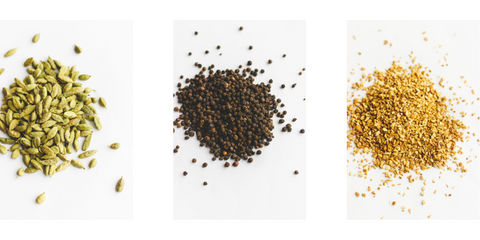
Tiny pod, huge personality. We love using lots and lots of this green, naturally sweet, menthol-flavored seed pod in our Chai. Seriously, there's really nothing like it. It's a favorite in savory dishes and desserts for these reasons, and South Asians have always known it's good for digestion.
Cardamom is super healthy too. Cardamom pods are so packed with antioxidants and free radical-fighting properties, it's clinically proven to help support the body’s natural inflammatory response. It can also lower blood pressure, and can protect against all kinds of illness in pre-diabetic folks.
In fact, cardamom is kind of an all-around superhero, fighting cavities and harmful bacteria, and containing effects across the board: antispasmodic, gastroprotective, antibacterial, anti-food poisoning, carminative, diuretic, expectorant, heart-function improving, and more.
What are the Benefits of Peppercorn?
Black pepper is a serious healer. Piperine, a compound researchers have studied for its antioxidant properties, is the active ingredient that gets the most press, but peppercorn also contains disease-fighting agents that boost your immunity. We use Malabar black peppercorn from India's coast because it's known for being fruity and bold.
Why Do We Use Cinnamon?
Cinnamon is a good friend, too. It contains the same antioxidant polyphenols tea leaves have, it's anti-inflammatory, and it's heart-healthy. Folks with blood sugar issues like diabetes might benefit from cinnamon, too, because it's been shown to lower insulin and cholesterol in animals. Cinnamon even shows promise to protect against brain damage and neurodegenerative disease such as Parkinson’s and Alzheimer’s, and “upregulates” (boosts) positive hormones in the brain!
What are the Benefits of Allspice?
This little Jamaican ball of flavor, carrying hints of nutmeg, peppercorn, juniper, and more (hence its name “allspice”) has lots of awesome compounds. Protecting against disease, we've got another wellness spice here!
Antioxidants are here to save the day again. It's even got loads of polyphenols, those free radical-busting antioxidants that make tea so special. Plus, it's antibacterial, which means you can bet it helps you fight bad breath and food poisoning.
Why Do We Use Star Anise in Our Chai?
One last spicy antioxidant babe on our list! Just a little goes a long way, but Chai wouldn't be the same without her. Star anise is a powerful anti-viral agent, as well as an antimicrobial, antifungal, anthelmintic, insecticidal, secretolytic, antinociceptive, anti-inflammatory, gastroprotective agent, and more. There may even be ways that star anise increases the body's ability to use energy and nutrients. That remains to be seen, but we've got our ears open.

Instructions for Brewing Chai Tea
Sweet. Spicy. Fiery and Supportive.
We dedicate this Chai to the spirit of early mornings, spinning records, cuddling with books, and the art of chilling out. It's the perfect way to energize without caffeine, and to ease and protect your tummy while you do it.
Brewing hot:
- Measure 5 g loose leaf tea (or 2 heaping tsp) per 10 oz water
- Steep in 185°F water for 1 minute
- Strain and serve
Brewing cold:
Here are cold brew instructions for any of our teas! You’ll find a sweeter flavor via this method with Chai. Whether brewing hot or cold, loose or with tea bags, you can add flavor enhancers like honey or cane sugar, brown sugar, coconut milk, cinnamon sticks, frothed whole milk, and even whole cloves or fresh ginger.
But Wait...Do You Make “Chai Tea Lattes?”
Chai was not originally part of our line when the company was founded, but that all changed when coffee shops and cafes started requesting a less syrup-y, less sweet chai concentrate for their menus.
In 2014, we began to develop St. Louis’ very own, local chai concentrate with a little help from our friends in the coffee industry. The “Chails” (Chai Trials, lol) were a series of tasting events with The Mudhouse on Cherokee Street and Goshen Coffee in Soulard and the Metro East where we refined our recipe with input from customers and baristas.

The recipe that emerged is our city’s best-kept secret: an extra special, freshly-brewed Chai Concentrate for local St. Louis cafes only. Brewing chai is all about the process. Slowly layering in spice at a low and consistent temperature for hours. Constantly stirring and agitating the spice so that it releases maximum flavor, and then quickly steeping Assam black tea at the very end.
Chai on a cafe menu is often a safe place for customers: its sweetness is comforting and familiar. So we also stepped out of our comfort zone to add a little more sugar than we typically would. Even so, our chai is brewed with one fifth of the sugar most conventional concentrates on the market.
The majority of Big Heart Tea Co’s teas are blended with no more than 5 commonly-known ingredients. We do this because we want you to have an individual experience with each one of the herbs and spices, to really taste the nuance each ingredient adds and to feel the energy that they give.
But chai is classically blended with a variety of herbs and spices so we broke our own rule and went all out, using 8 certified organic herbs and spices to make our very own version of Chai.
Cheers to Chai
Great chai isn't about following one recipe. It's about honoring traditions, respecting where they came from, and making something you'd be proud to share with another person.
That's exactly what we've done.
If you're ready for a chai made with whole spices, certified organic ingredients, and a whole lot of heart, we'd love for you to brew a cup with us.